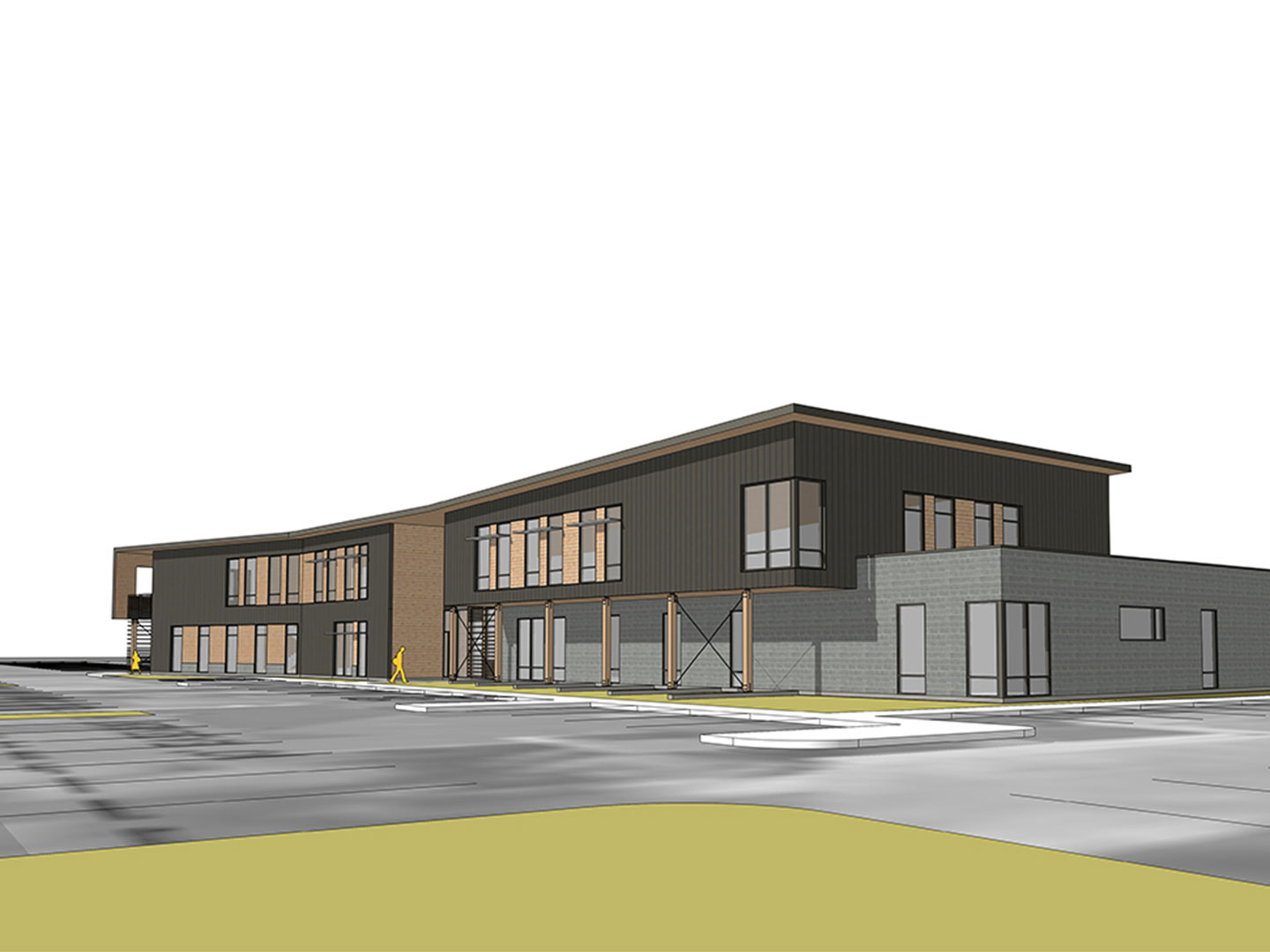
Wilmington, North Carolina has transformed into one of the Southeast's fastest-growing healthcare markets, driven by an influx of retirees to Brunswick and New Hanover counties and a booming coastal economy that has expanded the tax base supporting healthcare infrastructure investment. Novant Health New Hanover Regional Medical Center, renamed and expanded following a 2021 system acquisition, now anchors a healthcare network that includes multiple outpatient campuses, the Zimmer Cancer Center, and a rapidly developing medical district along 17th Street that is attracting specialty practices from across the Carolinas. Roofing healthcare facilities in the Wilmington market means operating at the intersection of Atlantic hurricane exposure, coastal salt air corrosion, and the sterile-environment standards that regulate every licensed medical facility in the state.
Atlantic hurricane landfalls are not an abstract risk in Wilmington — they are a recurring operational reality. The direct impacts of Florence in 2018 and Dorian in 2019 tested the building envelope integrity of every healthcare facility from Wrightsville Beach to Leland, and several area facilities discovered drainage failures, flashing separations, and penetration compromises that might have gone unnoticed for years were it not for storm-level rain loads. The lesson from those events is that proactive pre-season rooftop preparation is not optional for any healthcare facility in the Cape Fear region. We conduct structured pre-hurricane season assessments at enrolled facilities each May, specifically evaluating perimeter securement, HVAC curb flashing integrity, and internal drain capacity under high-volume rainfall conditions.
Salt air corrosion is a factor in Wilmington healthcare roofing that does not appear in continental U.S. markets. Metal components — edge metal, HVAC curb caps, fastener heads, and equipment support frames — degrade significantly faster within three miles of the Atlantic coastline and along the Cape Fear River corridor than they do inland. Facilities near Wrightsville Beach and along the Waterway have discovered that standard galvanized edge metal requires replacement in as few as 10 years, versus 20 or more years in non-coastal markets. Stainless steel or aluminum edge metal systems, though more expensive at installation, reduce total lifecycle cost for coastal Wilmington healthcare buildings by eliminating premature corrosion-driven replacement cycles.
New Hanover Regional's expansion and the parallel growth of Wilmington Health's outpatient network have created demand for rapid-sequence construction timelines that test the quality controls of roofing installations. When a new medical office building or imaging center needs to be weather-tight in 60 days, there is pressure to skip the third-party inspection steps that catch deficient seam welds and inadequate fastening before the membrane is buried under ballast or cover board. We maintain third-party inspection relationships with certified roofing observers who provide independent verification of installation quality at every major healthcare project, creating the warranty documentation that protects the building owner and the clinical operation below.
HVAC systems at Wilmington healthcare facilities run under continuous load given the coastal climate's year-round humidity. Surgical suite air handling units maintaining precise pressure differentials and temperature stability generate significant exhaust heat that must exit the building through properly flashed roof penetrations. The combination of salt air and high exhaust heat at penetration locations accelerates flashing material degradation around AHU stacks and generator exhaust points. We use pitch pocket fill materials specifically rated for coastal chemical exposure at these locations, documented in a penetration inventory that tracks condition at each service visit so that individual failures can be addressed before they propagate to the surrounding membrane.
The skilled nursing and assisted living sector in Wilmington has grown in direct proportion to the coastal retirement migration that defines the region's demographics. Facilities along the College Road and Carolina Beach Road corridors house thousands of residents whose wellbeing depends on building envelopes that do not fail during summer squalls or the coastal nor'easters that bring several inches of driving rain each fall. North Carolina DHSR (Division of Health Service Regulation) conducts annual licensing surveys of these facilities, and physical plant conditions — including evidence of active roof leaks or visible water damage — are among the most commonly cited deficiencies. A documented maintenance program with annual condition reports provides the evidence base that supports a clean DHSR survey.
Storm water management at Wilmington healthcare facilities intersects roofing performance in a way that is particularly consequential given the region's flat topography and the regulatory attention paid to stormwater runoff under the Cape Fear River Basin rules. Internal roof drains and scuppers that are blocked by debris slow roof drainage, creating ponding that increases hydrostatic pressure on membrane seams. In a single intense convective storm — of the type common along the Cape Fear coast each summer — a partially blocked drain can cause ponding to depths that exceed design tolerances within minutes. Our maintenance protocols at Wilmington healthcare sites include drain flow testing under simulated rainfall load to verify that drainage capacity matches the facility's storm design parameters.
Surgical centers and outpatient specialty facilities clustered near the Physicians Drive and Randall Parkway medical corridors represent a newer generation of Wilmington healthcare rooftops. These buildings, many constructed between 2010 and 2020, use TPO and PVC single-ply systems that are approaching the mid-life maintenance window where seam testing and flashing reinspection are most cost-effective. Mid-life assessments — conducted when a membrane is eight to twelve years old — identify whether the system is tracking toward its full warranty life or whether localized repairs and enhancements are needed to prevent premature failure. Investing in a mid-life assessment is consistently less expensive than addressing a leak-driven remediation event above a sterile procedure room.
Wilmington's healthcare construction pipeline shows no signs of slowing, with Brunswick County's rapidly growing population driving new facility development in Leland, Bolivia, and Shallotte. These Brunswick County healthcare projects face the same coastal exposure factors as their New Hanover counterparts but are often served by smaller general contractors less familiar with healthcare-specific roofing standards. We bring standardized healthcare roofing protocols to every Brunswick County project — ICRA-compliant construction sequencing, penetration inventory documentation, and manufacturer-certified installation teams — ensuring that the facilities serving coastal Carolina's growing healthcare market are built to the same standards as the established hospital campuses on the Wilmington side of the Cape Fear River.
- How does Atlantic hurricane exposure affect roofing specifications for Wilmington healthcare facilities?
- Healthcare facilities in New Hanover and Brunswick counties must meet North Carolina State Building Code wind uplift requirements calibrated to coastal exposure categories, with hospitals typically assigned Essential Facility risk classification requiring higher design standards. Membrane assemblies are specified using ASCE 7 wind uplift testing results, with enhanced perimeter fastening and hurricane-rated edge metal. Pre-season inspections each May evaluate whether the installation remains in compliance with these standards as the system ages.
- What corrosion-resistant materials should coastal Wilmington healthcare facilities specify?
- Edge metal, HVAC curb caps, fastener heads exposed at perimeter terminations, and equipment support frames should be specified in stainless steel or aluminum rather than standard galvanized steel for facilities within three miles of the ocean or Cape Fear River. Stainless components cost more upfront but avoid the 10-year premature replacement cycle seen with galvanized metal in salt air environments. Penetration flashing materials should also be selected for coastal chemical compatibility.
- What does a pre-hurricane season rooftop assessment cover for a Wilmington hospital?
- A pre-season assessment evaluates perimeter edge metal securement, HVAC and mechanical curb flashing condition, internal drain flow capacity, membrane seam integrity at high-stress locations, and parapet cap flashing attachment. The assessment produces a written report with photographic documentation and prioritized repair recommendations. Repairs identified in the assessment are completed before June 1 to ensure the facility enters hurricane season with a fully prepared roof envelope.
- How does DHSR evaluate physical plant conditions during skilled nursing facility surveys in North Carolina?
- DHSR surveyors inspect the physical environment of licensed skilled nursing and assisted living facilities for evidence of building maintenance deficiencies, including active leaks, water stains, or visible ceiling damage from past moisture intrusion. Facilities that maintain documented roofing inspection and repair histories are better positioned during surveys than those with reactive-only maintenance records. A citation for physical plant deficiencies can trigger a corrective action plan with a mandatory completion timeline.
- What is mid-life membrane assessment and when should it be done?
- A mid-life assessment is a professional evaluation conducted when a roofing membrane is eight to twelve years old, examining seam integrity, flashing condition, penetration details, and insulation moisture content to determine whether the system is on track for its full warranty life or requires targeted interventions. The assessment typically involves seam probe testing, moisture scan surveys, and a condition map of the entire roof area. Most healthcare facilities that invest in mid-life assessments extend their roof system life by five or more years compared to those that wait for visible failures.