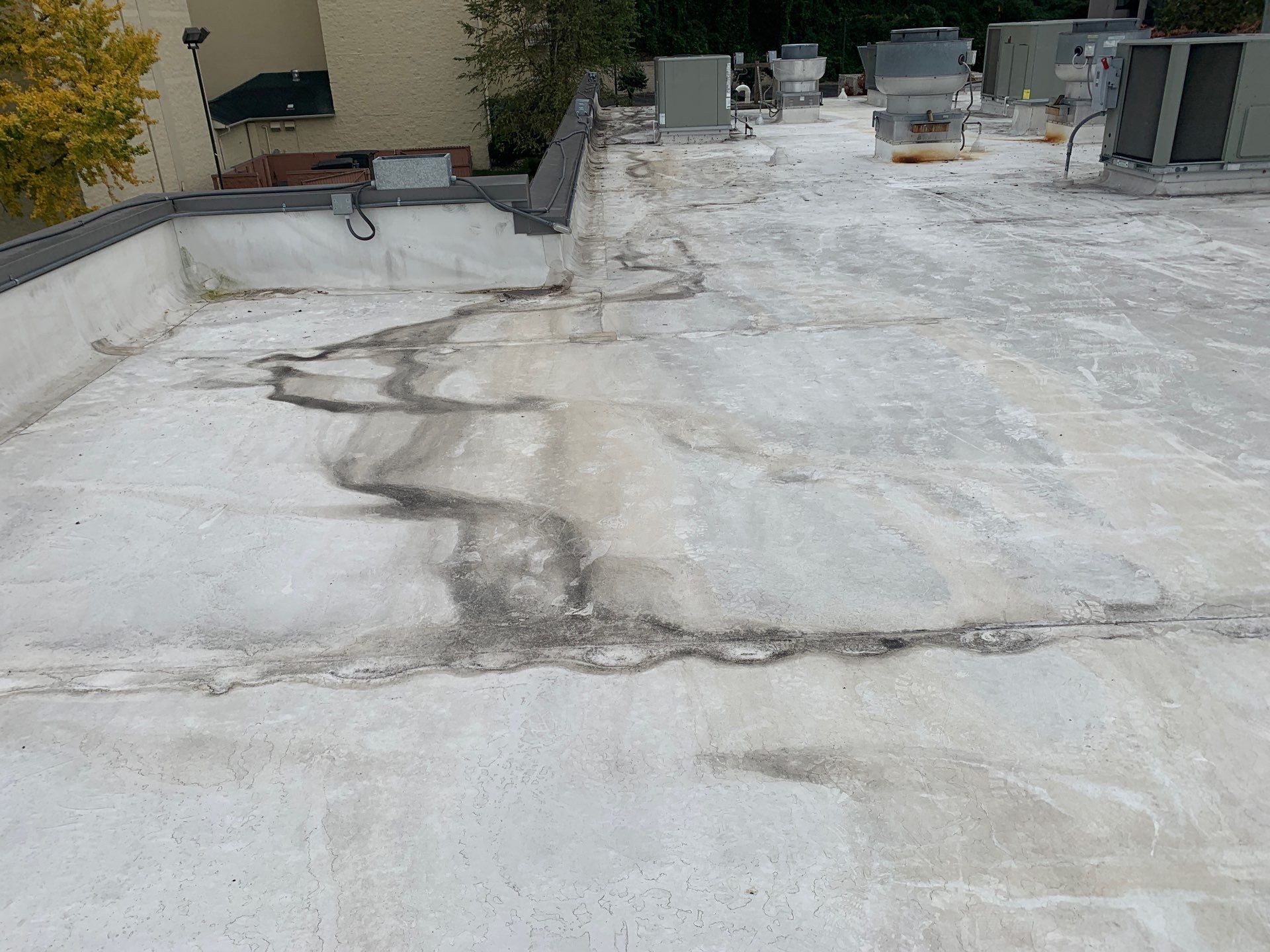
Hurricane Damage Roof Repair is not a specialty service in Wilmington — it is a core one. The Cape Fear coast has experienced more direct and near-direct hurricane landfalls in the past decade than almost any other stretch of the Eastern Seaboard. Florence made landfall near Wrightsville Beach in September 2018 as a Category 1 storm and then stalled, depositing more than 30 inches of rain on parts of New Hanover and Brunswick counties over four days. Matthew tracked close enough in 2016 to produce widespread wind and water damage across the region. Dorian in 2019 delivered tropical storm-force winds and heavy rainfall across the area. For commercial property owners in this market, hurricane damage is not a rare catastrophic event to be managed once in a career. It is a recurring operational reality that shapes how buildings should be maintained, how insurance should be structured, and what to expect from a commercial roofing contractor when the next storm arrives.
Wind damage mechanics in a hurricane differ from the kind of damage a typical severe thunderstorm produces. In a named storm event, sustained winds — not just gusts — apply continuous uplift and lateral pressure to roof components for hours at a time. Perimeter flashings, coping caps, and edge metal experience sustained negative pressure at roof edges and corners that can progressively peel back components that would have survived a brief severe thunderstorm gust. A coping cap that is improperly lapped or has corroded fasteners may hold through the first two hours of a storm and then fail catastrophically as the sustained uplift fatigues whatever connection remains. Once edge metal fails, it can carry sections of membrane with it, opening large areas of the roof to direct rainfall in minutes.
Flying debris is a damage mechanism specific to hurricanes and strong tropical storms. In a Florence-level event, materials from nearby structures, sign panels, HVAC equipment, trees, and construction materials become airborne and impact commercial roofs with force sufficient to puncture or tear membrane systems that are otherwise in excellent condition. Industrial buildings in areas with significant nearby construction, signage, or mature tree canopy — Northchase, the Port area, downtown Wilmington — are particularly exposed to debris impact damage. Debris impact creates localized punctures and tears that may be small but allow immediate water infiltration during the remainder of the storm event, which in a slow-moving system like Florence can be 24 to 48 hours of continuous rainfall after the initial damage.
Sustained rain infiltration is the damage mechanism that most distinguishes hurricane damage from other types of storm damage. When a fast-moving severe thunderstorm hits, it is typically followed within hours by dry conditions that allow some degree of drying. A major hurricane that stalls over the region — as Florence did — produces days of continuous rainfall into whatever breach has been created. A small membrane tear that admits a modest amount of water during the initial wind event becomes a pathway for thousands of gallons of water over the subsequent 72 hours. Wet insulation, saturated decking, destroyed ceiling systems, ruined inventory, and potential structural damage from sustained water infiltration are all Florence-pattern outcomes that we documented firsthand on commercial buildings across New Hanover County.
Post-hurricane damage repair begins with thorough documentation before any material is removed or repaired. Insurance adjusters for commercial property claims in the Wilmington market have developed experience with hurricane damage assessment, but the adjuster's visit may not happen for days or weeks after the storm. In the interim, we install temporary protective measures — commercial tarps on open areas, temporary membrane patches on critical failures — while preserving the documented evidence of the original damage condition. Photographs of every failed detail, every area of lifted or torn membrane, every open penetration, and every section of missing edge metal are taken before any protective work begins. That documentation is the foundation of the insurance claim and cannot be reconstructed after repairs are underway.
Repair scope scoping after a hurricane requires distinguishing storm damage from pre-existing conditions — a distinction that matters significantly for insurance claim outcomes. Insurance coverage applies to sudden storm damage, not to deferred maintenance or pre-existing deterioration. We document storm damage clearly with the photographic evidence that shows fresh failure characteristics — membrane that has torn rather than degraded, flashing that has been displaced rather than corroded through over years, edge metal that has peeled back at fastener points rather than corroded loose. Where pre-existing conditions exist alongside storm damage, we document both accurately and honestly, which protects both the property owner's claim for legitimate storm damage and the integrity of the documentation process.
Large commercial and industrial buildings on the Port of Wilmington corridor, in Northchase, and at the ILM Business Park present specific repair logistics challenges after a major storm. These buildings have expansive flat roof areas, heavy rooftop mechanical equipment, and complex drainage systems. Debris removal from large flat roofs after a hurricane can itself be a significant operation — sheet metal, tree branches, and displaced materials may be distributed across tens of thousands of square feet of roof area before repair work can begin. Access equipment — aerial lifts, material hoists — may need to be staged in areas that are also being used for ongoing facility operations. We coordinate with facility managers and tenants throughout the post-storm repair process to minimize operational disruption while completing repairs under time pressure.
Historic downtown Wilmington commercial buildings present different post-hurricane repair challenges. Masonry parapet walls that have absorbed hurricane rainfall develop internal moisture conditions that affect flashing repair — wet masonry does not accept roofing adhesives and primers correctly, and flashing repairs executed too quickly after a storm on wet masonry fail sooner than those executed after the wall assembly has dried. We understand the drying-time requirements for different repair types and sequence work accordingly, prioritizing temporary protection for immediate weatherproofing and completing permanent repairs on the correct timeline for the substrate conditions.
The commercial roofing repair needs following a major hurricane in Wilmington extend for months and sometimes years after the storm event. Insurance claim processing, contractor availability, and the sheer volume of damage across the region mean that permanent repairs are often phased over an extended period. We have been active in post-storm repair work following each of the significant hurricane events of the past decade and understand the extended timeline that commercial hurricane repair realistically follows. Buildings that are under temporary protection waiting for permanent repair work receive periodic check-ins to ensure that temporary systems are maintaining their protective function through subsequent weather events.
Questions Owners Ask
My building was damaged in Hurricane Florence but the repairs were only temporary. Can you help with permanent repair now?
Yes. Post-Florence permanent repair work continues years after the storm as insurance settlements are finalized and owners address damage that received only temporary attention in the immediate aftermath. We assess the current condition of the building — including any deterioration that has occurred in the temporary protection period — and scope permanent repairs based on the current situation. We can also review prior damage documentation if it exists and help coordinate with your insurance carrier if the claim is still open.
How do I tell the difference between hurricane damage and pre-existing roof problems for insurance purposes?
Fresh storm damage has specific characteristics depending on the damage mechanism — torn edges at membrane failures, fastener pull-through at edge metal connections, debris impact punctures with identifiable impact morphology. Pre-existing deterioration shows gradual degradation patterns — corrosion through metal components over time, UV oxidation and cracking at membrane surfaces, progressive lap adhesive failure at seams. We document both accurately in our post-storm assessments, which protects your legitimate storm damage claim while maintaining the honest documentation that the insurance process requires.
What should I do immediately after a hurricane damages my commercial building's roof?
First, ensure the building is safe to enter — post-hurricane structural conditions can be hazardous. Then contact your insurance broker to report the loss. Call us for emergency dry-in and documentation. Do not attempt to make repairs yourself before documentation is complete — disturbing the damage evidence before the adjuster's visit can complicate the claims process. We can install temporary protective measures that prevent further interior damage while preserving the evidence of the original damage condition for adjuster review.
How long does hurricane roof repair typically take on a large commercial building?
For buildings with significant damage — large sections of torn membrane, widespread edge metal failure, debris impact damage across the roof field — permanent repair work on a major commercial building can take two to six weeks depending on damage extent, material availability, and weather conditions during the repair window. Insurance processing and adjuster approvals often extend the timeline from storm event to permanent repair completion to several months. We work within the insurance process timeline and keep temporary protection in good condition throughout.
Should I upgrade my roof system when repairing hurricane damage, or just replace in kind?
Post-hurricane replacement is an excellent opportunity to upgrade to a system with better wind uplift resistance and coastal durability — and insurance proceeds often make the timing financially feasible. For example, upgrading from a ballasted EPDM system to a fully adhered TPO system, or from exposed-fastener R-panel metal to standing seam metal on a coastal hospitality building, addresses the vulnerabilities that led to the hurricane damage in the first place. We discuss upgrade options during damage assessment and provide comparative pricing so owners can make an informed decision.