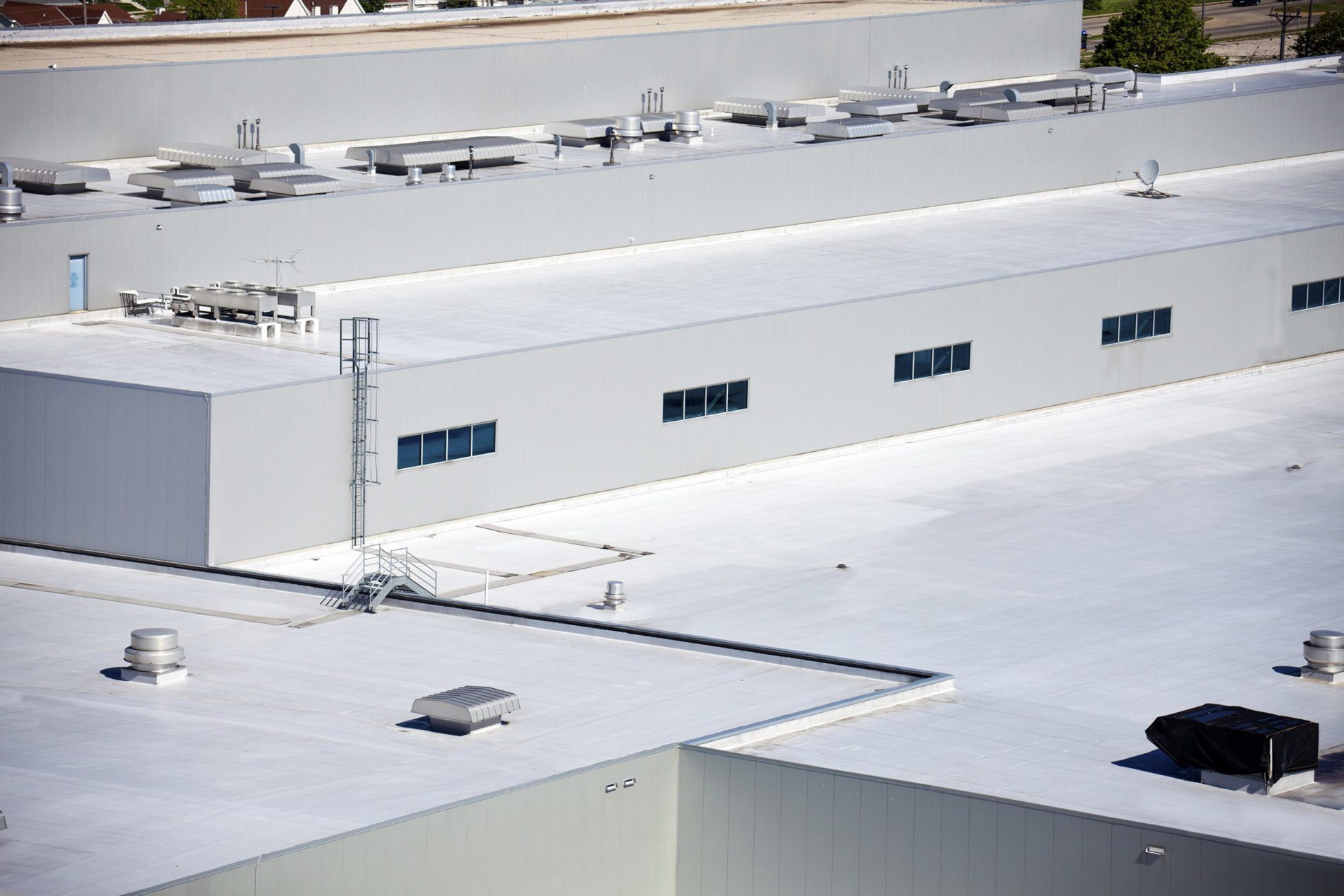
Corning, which operates a significant optical fiber and specialty glass manufacturing facility in Wilmington, anchors a technology manufacturing base that includes film and television production infrastructure, biotechnology manufacturing, and maritime/port industry support facilities in the Cape Fear River industrial corridor. Wilmington's manufacturing sector combines the process chemical intensity of specialty materials production with the coastal hurricane exposure and salt-air environment of a port city positioned at North Carolina's southeastern tip—a combination that demands roofing expertise beyond the capacity of inland or northern contractors who have not worked in this specific market.
Specialty glass and optical fiber manufacturing at Corning's Wilmington facility generates extremely high temperatures at the draw tower level and releases silica dust and specialty glass compounds that can accumulate in rooftop drainage systems and create blockages far faster than ordinary industrial dust. The draw process also generates significant radiant heat that elevates interior temperatures near the roofline substantially above ambient, creating a persistent thermal gradient between the underside of the roof assembly and the exterior that drives moisture toward the colder side of the assembly. Understanding which side of the assembly is colder—and therefore which side needs vapor control—requires climate analysis specific to Wilmington's warm-humid coastal conditions.
Hurricane exposure in Wilmington is among the most severe in the continental United States outside of South Florida. The city sits at Cape Fear, a geographic feature that has historically attracted hurricane landfalls, and has experienced direct hits from major hurricanes including Floyd, Fran, and Florence within a 25-year window. Every Manufacturing Facility Roofing specification in Wilmington must meet North Carolina Building Code's coastal wind speed requirements, which mandate design wind speeds of 130-140 mph for most of New Hanover County, with additional requirements for buildings within the High-Velocity Hurricane Zone designation. Edge metal systems, coping caps, and through-wall flashings must be engineered to remain in place at these design wind speeds.
Salt air corrosion at Wilmington's manufacturing facilities is driven by both the Atlantic Ocean exposure from the east and the Cape Fear estuary from the west. Facilities in the river industrial corridor experience chloride deposition from two directions and at levels comparable to oceanfront exposure zones in less brackish estuary systems. All metal roofing components must be specified in stainless or marine-grade aluminum, and maintenance inspection of metal components must occur on annual cycles with particular attention to areas where two dissimilar metals meet—a common galvanic corrosion initiation point that accelerates corrosion well beyond the rate of either metal alone.
Vibration in Wilmington manufacturing facilities ranges from the precision-level signatures of optical fiber draw equipment to the substantial vibration of port support and maritime fabrication facilities. Draw tower equipment operates continuously and generates low-frequency vibration signatures that accumulate membrane fatigue at restrained points over the equipment's operating life. Port-area fabrication facilities use heavy lifting equipment and large-scale metalworking machinery that generates higher-amplitude but less continuous vibration. Both profiles require that re-roofing projects include an assessment of existing fastener integrity, because vibration history that is not visible on the membrane surface may have compromised the mechanical connection of the deck system below.
Skylights in Wilmington manufacturing facilities must meet the North Carolina Building Code's hurricane-impact requirements for the coastal zone. Impact-rated skylights with current NC Uniform Residential Code or Commercial Code approvals are required, and the frame anchoring must be verified to resist the combined wind uplift and lateral load imposed by hurricane-force conditions. Historical experience with Wilmington hurricanes demonstrates that improperly anchored skylight units are frequently the first building envelope component to fail in a major storm, and the resulting opening allows rain-driven water to enter at flow rates that damage contents far more severely than a simple membrane leak.
Schedule coordination in Wilmington manufacturing must incorporate a robust hurricane season protocol. The Atlantic hurricane season coincides with the peak outdoor construction season in North Carolina, and contractors working in Wilmington from June through November must maintain active awareness of National Hurricane Center track forecasts and be prepared to implement hurricane protection protocols on short notice. The 2018 experience with Hurricane Florence—which stalled over Wilmington and produced 30+ inches of rainfall over three days—demonstrated that storm duration, not just peak wind speed, is the relevant planning variable for Wilmington manufacturing facilities, because sustained rain over multiple days produces cumulative water infiltration from temporary protection failures that single-event storms do not.
North Carolina's coastal construction regulations add specific administrative requirements to Wilmington Manufacturing Facility Roofing projects. The Coastal Area Management Act (CAMA) review may apply to facilities within the regulated area adjacent to the Cape Fear River and its tributaries, and New Hanover County requires specific storm drainage documentation for any project that modifies an existing impervious surface drainage pattern. The North Carolina Division of Water Quality's stormwater permitting requirements may also apply to substantial re-roofing projects that change the drainage characteristics of the site, requiring coordination with the building owner's environmental compliance team before construction begins.
Maintenance programs for Wilmington manufacturing facilities must address the combined effects of hurricane season and year-round humidity on membrane integrity. Post-hurricane inspection protocols should be defined in standing maintenance agreements, specifying the inspection scope—including drone survey of the full membrane surface and all edge metal and flashing conditions—and the documentation requirements for insurance purposes. The high frequency of significant storm events in Wilmington means that this protocol will be exercised regularly, and its documentation requirements are not theoretical.
- How does Corning's optical fiber draw process affect roofing design above the draw tower at the Wilmington facility?
- The extremely high temperatures of the draw process create significant upward thermal convection that elevates roofline temperatures above ambient and drives moisture vapor upward through any gaps in the vapor control layer. The roofing assembly above draw tower areas must be designed with a continuous air and vapor barrier at the deck level to prevent this upward moisture drive from entering the insulation assembly, and the deck itself must be rated for the elevated temperature exposure that the draw process creates.
- What wind speed design requirements apply to manufacturing facilities in New Hanover County?
- The North Carolina State Building Code sets a basic wind speed of 130-140 mph for New Hanover County, with the precise value depending on the building's risk category and location relative to the inland limit of the coastal zone. Buildings classified as Risk Category III (which includes facilities with a high level of hazard to life or essential facilities) use a higher importance factor that increases the design wind speed further. The roofing contractor must verify the specific design wind speed with a licensed structural engineer before specifying the roof system uplift requirements.
- How are CAMA permit requirements managed for Wilmington Manufacturing Facility Roofing projects?
- CAMA permits are required for development activities within the North Carolina Coastal Area Management Act's Areas of Environmental Concern (AEC), which include areas adjacent to coastal shorelines, estuaries, and certain wetlands. Whether a specific Wilmington Manufacturing Facility Roofing project triggers CAMA review depends on the facility's location relative to the AEC boundary. The building owner's environmental compliance team and a CAMA-experienced contractor or engineer should make this determination before project permits are submitted.
- What drainage considerations apply specifically to Wilmington's hurricane-rainfall exposure?
- Hurricane Florence demonstrated that Wilmington can receive 30+ inches of rainfall over a 72-hour period—rates that overwhelm any drainage system designed for standard storm intensity. Manufacturing facility roofs in Wilmington should have primary and overflow drainage sized for the most intense event likely to be experienced in the facility's service life, and temporary protection systems installed during re-roofing should be designed for sustained rainfall over multiple days, not just the peak intensity of a short-duration convective storm.
- What is the maintenance inspection frequency recommended for Wilmington manufacturing facility roofs given the coastal and hurricane environment?
- Annual inspections at minimum, with post-storm inspections after any tropical weather event that produces sustained winds above 50 mph at the facility location. The annual inspection should include drone survey of the full membrane, infrared thermography in fall when temperature differentials are sufficient for reliable wet insulation detection, and close-up inspection of all metal components for corrosion initiation. Post-storm inspections focus on edge metal integrity, penetration flashing condition, and debris removal from drainage pathways.