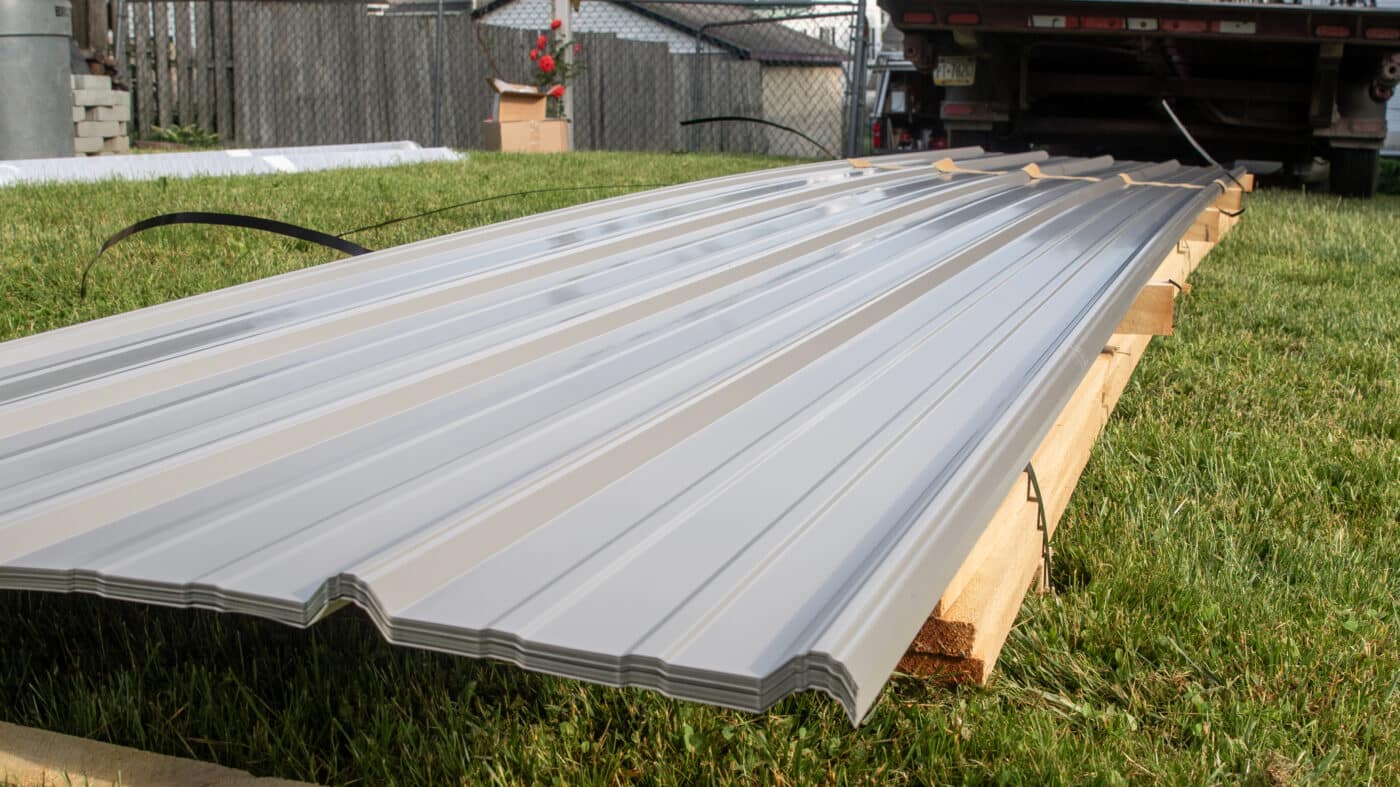
Metal R-panel roofing is the dominant system on light industrial and warehouse buildings throughout the Wilmington metro area. Drive through Northchase Industrial Park, Pender Commerce Park, or the International Logistics Park near the airport and you will see block after block of exposed-fastener R-panel on single-story and multi-bay industrial buildings constructed from the 1980s through the 2010s. It is a practical system for industrial construction — fast to install, cost-effective, durable under normal conditions, and available from multiple regional suppliers. In Wilmington's coastal environment, however, R-panel has a specific vulnerability that inland industrial markets do not face to the same degree: accelerated fastener corrosion from salt-air exposure, and the water infiltration that follows when those fasteners fail.
The exposed fastener is both R-panel's installation efficiency and its long-term vulnerability. Each panel is secured to the structural purlins through the panel face with a screw fastener topped by a rubber neoprene washer that creates a weather seal at the penetration point. In an inland environment, those washers last 15 to 20 years before UV degradation causes them to crack and lose their sealing function. In Wilmington's coastal environment — particularly on buildings within two to three miles of the ocean, sound, or Cape Fear River — the combination of salt air, UV exposure, and the thermal cycling from Wilmington's wide seasonal temperature range accelerates both washer degradation and fastener corrosion. We regularly inspect R-panel buildings in Northchase and Pender Commerce Park where the fastener washers have failed and the fastener shanks have corroded to the point where they are no longer holding the panel securely to the purlin beneath.
Failed fasteners on R-panel roofs create two distinct problems. The immediate problem is water infiltration at the fastener penetration point — a cracked washer or corroded fastener that has backed out of the panel face allows water to enter the building at every rain event, and on a large industrial building with thousands of fasteners, even a modest percentage of fastener failures can translate to significant water entry. The second problem is structural — a panel that has lost its fastener connection to the purlin at the perimeter or at intermediate attachment points is vulnerable to wind uplift. In hurricane-force winds, R-panel sections that are poorly fastened can lift, peel, and delaminate from the structure. We have assessed multiple Northchase and Pender Commerce Park buildings after tropical events where fastener failures contributed to panel loss that would not have occurred had the fasteners been in proper condition.
Fastener replacement and re-fastening is a cost-effective maintenance intervention on R-panel roofs that are otherwise in sound condition. We use corrosion-resistant fasteners with EPDM-bonded neoprene washers rated for coastal exposure — not the standard zinc-plated fasteners that are appropriate for inland applications but corrode quickly in Wilmington's salt-air environment. Re-fastening can be combined with a lap sealant application at panel laps and ridge caps to address the other primary water entry points on aging R-panel systems. For buildings where the panel coating is still in good condition but fastener and sealant maintenance has been deferred, a systematic re-fastening and sealant program extends the roof system's life significantly without the cost of full panel replacement.
Panel coating condition is the other major aging mechanism on R-panel roofs in coastal Wilmington. Standard Galvalume and painted steel panels lose their protective coating over time through UV exposure, surface oxidation, and — in coastal environments — salt-air attack at any point where the coating has been scratched, mechanically damaged, or inadequately applied at panel edges. Once the steel substrate is exposed, corrosion progresses faster in Wilmington's salt-air coastal environment than it would inland. We assess panel coating condition during inspections using close visual examination and, when appropriate, coating thickness measurement — identifying sections where coating failure has progressed to bare metal and where rust propagation is underway. Panels with widespread coating failure and active rusting should be replaced; panels with localized coating damage can be treated with rust-inhibiting primer and touch-up coating to stop the progression.
Full R-panel replacement on industrial buildings in the Wilmington market is a project we approach with careful logistics planning. Large industrial buildings — 50,000 to 200,000 square feet — require phased panel replacement to keep the building weather-tight during the project. We work with building managers and tenants to plan panel replacement sequences that maintain weather protection over occupied and sensitive interior areas while progressing systematically across the roof. Material staging on large industrial sites requires coordination with facility operations — forklift access, dock door clearance, and crane positioning all need to be planned in advance to avoid conflicts with the building's ongoing operations.
For industrial building owners considering a full R-panel replacement, the choice between replacing in kind with new R-panel versus upgrading to standing seam metal is worth evaluating seriously. Standing seam metal with concealed fasteners eliminates the exposed-fastener vulnerability entirely — there are no fastener penetrations in the panel field to corrode or admit water. The cost premium for standing seam over R-panel is meaningful, but in Wilmington's coastal environment, the reduced maintenance burden and improved wind uplift resistance over a 30- to 40-year roof life often justifies the upfront cost difference. We present both options with honest cost-versus-longevity analysis on any full replacement project.
Gutters and downspouts on R-panel industrial buildings in the Wilmington market need to be sized and specified for coastal conditions. Standard residential-grade aluminum gutters fail rapidly in the salt-air environment and are inadequate for the drainage volume produced by large industrial roof areas during tropical rainfall events. We specify commercial-grade steel or heavy-gauge aluminum gutters with corrosion-resistant finishes, sized using drainage calculations for Wilmington's design storm rainfall intensities. Downspout discharge routing on large industrial sites often requires underground piping to reach storm drain connections — we design and install complete drainage systems that handle the roof area's drainage load without creating foundation or pavement drainage problems at the building perimeter.
Every R-panel project we complete — whether a fastener maintenance program, panel section replacement, or full roof replacement — is documented with a condition baseline, progress photos, and final installation records including fastener type, spacing, and panel material specifications. That documentation is the baseline for future maintenance planning and for insurance purposes when storm events occur. Industrial building owners in Northchase and Pender Commerce Park who have operated without current roof documentation are in a weaker position when they file storm damage claims — we consistently encourage industrial clients to maintain current-condition roof records regardless of whether they are scheduling repair work.
Questions Owners Ask
How often should exposed fasteners on a metal R-panel roof be inspected and replaced in Wilmington's coastal climate?
Annual inspection is appropriate for buildings within two to three miles of tidal water or the ocean. Buildings farther inland in the New Hanover and Pender County industrial corridors should be inspected every two to three years. Fastener replacement timing depends on what the inspection finds — we look at washer condition, fastener corrosion, and whether fasteners have backed out of the purlin. In coastal Wilmington, fastener washers on standard fasteners typically begin showing meaningful degradation at 8 to 12 years, faster than the 15 to 20 year inland benchmark.
Is it worth upgrading from R-panel to standing seam metal when I replace my industrial roof?
In Wilmington's coastal environment, the case for upgrading is stronger than in inland markets. Standing seam eliminates the exposed fastener vulnerability that drives most R-panel maintenance costs, and its concealed-fastener wind uplift performance is significantly better than R-panel — an important consideration in a hurricane-exposed market. The premium over R-panel in installed cost is typically 20 to 35 percent, but when you factor in the reduced maintenance cost over a 30- to 40-year service life and the better hurricane performance, standing seam often delivers lower total lifecycle cost for coastal industrial buildings.
My R-panel roof leaks at the fasteners after every rain. Is this repairable or does the whole roof need to come off?
Fastener-related leaks are repairable in most cases without full panel replacement, particularly when the panel metal is otherwise in good condition. The repair involves removing corroded fasteners, treating any rust at the fastener holes, and reinstalling with new corrosion-resistant fasteners and fresh EPDM-bonded washers. Panel lap sealant is applied or refreshed at the same time. This is a cost-effective intervention when the underlying panel is sound. If the panel metal itself has corroded through at multiple points or the panel coating has failed broadly, replacement is the right answer.
Can you coat my existing R-panel roof to improve its performance and extend its life?
Yes, elastomeric and silicone coating systems can be applied over sound R-panel metal to restore reflectivity, protect the panel coating from further UV degradation, and seal minor surface corrosion. The substrate must be properly prepared — rust-inhibiting primer at any areas of bare metal, fastener replacement and re-seating before coating, and thorough cleaning of the panel surface. A properly prepared and coated R-panel system can add 10 to 15 years of service life while adding cool roof energy performance. Coating over panels with widespread structural corrosion or fastener failure is not effective — those conditions require repair before any coating is applied.
How does salt air affect the R-panel metal itself, not just the fasteners?
Galvalume steel panels have reasonable inherent corrosion resistance from their aluminum-zinc coating, but salt air attacks any point where the protective coating has been compromised — scratches, cut edges, mechanical damage from equipment traffic, and areas where the factory coating was inadequately applied. Once the steel substrate is exposed in a coastal environment, rust propagation is faster than inland. Building owners who walk their industrial roof regularly for equipment maintenance and create scratches and scuffs without painting them over are accelerating this process. We include panel coating condition in every R-panel inspection and address bare metal areas before they develop into structural corrosion.