Live Oak Bank's corporate campus near Wrightsville Avenue in Wilmington anchors a growing professional office market that also includes CFPUA administrative facilities, New Hanover Regional Medical Center's business offices, and a collection of technology and professional service companies drawn by Wilmington's quality-of-life advantages and the University of North Carolina Wilmington's talent pipeline. The lower Cape Fear office market is coming into its own as a destination for corporate relocations, and the office buildings being developed and re-tenanted in this environment face the same post-Florence roofing reckoning that affected the region's entire commercial building stock in 2018.
Hurricane Florence's September 2018 impact on Wilmington office buildings documented the specific failure modes that define re-roofing specifications in this market today. Office buildings that suffered the most damage were those where edge metal had been installed without concealed clips or continuous cleats — the exposed-screw attachment systems that were standard before the 2010 North Carolina Building Code update failed progressively as Florence's sustained winds created upward pressure behind loose metal sections. Buildings re-roofed since 2018 with properly engineered edge metal, fully adhered membrane systems, and FM-approved assemblies performed substantially better in subsequent tropical weather events, providing direct empirical evidence that correct specification decisions make a measurable difference in storm outcomes.
Occupied-building protocols for Wilmington office re-roofing during hurricane season — which overlaps exactly with the optimal re-roofing weather window — require emergency preparedness planning that goes beyond the temporary tarping protocols adequate for a mild-climate market. A comprehensive emergency weather plan for a Wilmington office re-roofing project should specify protection protocols for every stage of the work sequence, identify clear responsibilities, include pre-staged emergency protection materials, and establish communication protocols with the National Hurricane Center, the National Weather Service Morehead City forecast office, and building management. Projects that do not complete this planning before mobilizing in hurricane season create unacceptable risk for both the contractor and the building owner.
LEED certification and sustainability credentials are important to Live Oak Bank and similar corporate tenants in Wilmington's growing professional market, where companies competing for technology talent prioritize workplace quality and sustainability performance. The North Carolina Sustainable Energy Association and Wilmington's progressive development community create an environment where LEED-certified office buildings can command premium rents from tenants who value the certification as a signal of building quality and operational management sophistication. Re-roofing projects that capture LEED credit opportunities — cool membranes, insulation upgrades, sustainable materials — contribute to certification maintenance for existing LEED-certified buildings and advance certification goals for buildings pursuing initial certification.
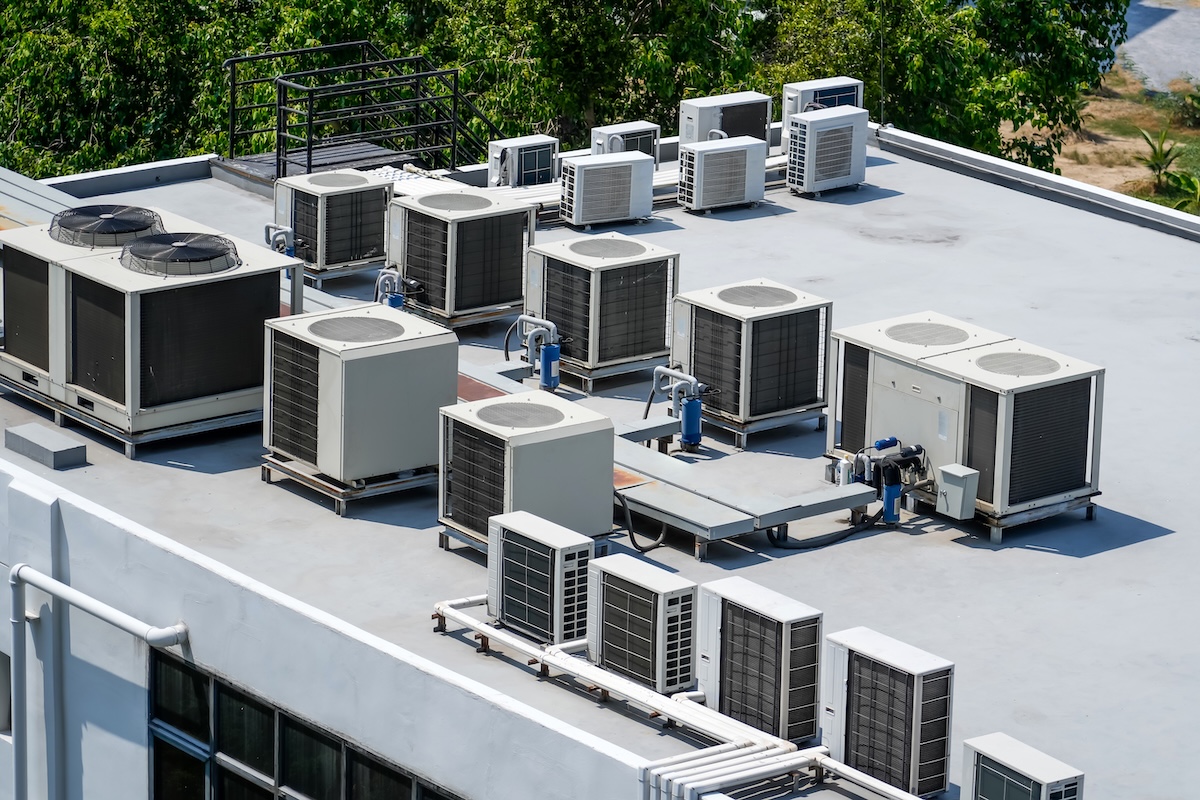
HVAC coordination for Wilmington office buildings involves the salt corrosion assessment that is essential for all coastal North Carolina properties. Cape Fear coastal air significantly accelerates coil corrosion and housing degradation on rooftop HVAC equipment, and units within two miles of the Atlantic Ocean or the Cape Fear River may show significant corrosion at ten years that would not appear until 20 years on an inland installation. The pre-roofing HVAC assessment must include coil condition photography, drainage pan inspection for corrosion-induced leaks, and refrigerant line connection inspection for salt-induced joint deterioration. Any unit showing active corrosion in structural or refrigerant-circuit components should be replacement-scheduled before or during the re-roofing project.
Energy codes for New Hanover County office buildings follow the 2018 North Carolina Building Code and IECC, with Climate Zone 3A provisions requiring continuous insulation levels and cool-roof SRI minimums. Duke Energy Progress and Dominion Energy North Carolina both offer commercial efficiency programs that provide rebates for qualifying insulation upgrades and cool-roof installations, and these rebates should be factored into the project financial analysis before finalizing specifications. Early application — before construction begins — is typically required to qualify for these programs, so utility rebate coordination should begin concurrent with the contractor selection process.
Balcony and terrace waterproofing on Wilmington's office buildings — particularly the newer downtown mixed-use developments and corporate campuses with outdoor amenity spaces — requires liquid-applied or sheet-applied waterproofing systems designed specifically for pedestrian-traffic and coastal-exposure conditions. Standard single-ply membrane systems are not appropriate for Wilmington's occupied balcony terraces, where UV-stabilized protective topcoats, flexible perimeter sealants, and positive drainage to interior drain bodies are all essential performance elements. The proximity to salt air makes annual inspection and prompt maintenance of sealant joints and drain body seals critically important for preventing the progressive water infiltration that occurs in neglected coastal terrace waterproofing systems.
Lease management for Wilmington office buildings involves a relatively close-knit professional community where landlord reputation matters significantly for long-term leasing success. Major tenants like Live Oak Bank, the regional law firms, and the healthcare system administrative offices that anchor Wilmington's professional market are sophisticated real estate consumers who assess building maintenance quality as a proxy for landlord professionalism. A well-managed re-roofing project — with advance notice, minimal disruption, clear communications throughout, and prompt completion — signals a management quality that supports lease renewal conversations. A poorly managed project generates negative word-of-mouth in a small professional community where the same individuals manage multiple tenant relationships across multiple buildings.
The Wilmington commercial roofing market includes contractors who have been through the post-Florence rebuilding experience and have direct, recent practice in the hurricane-resistant roofing details and FBC/NCBC wind code compliance that the local market now demands. When selecting a contractor for a Wilmington office re-roofing project, reference checks should specifically include questions about the contractor's performance on projects that were in progress or recently completed during tropical weather events — how the contractor responded to emergency conditions is a better predictor of future performance than any amount of sales presentation.
- What wind uplift requirements apply to Wilmington office building re-roofing?
- The 2018 North Carolina Building Code requires wind uplift compliance based on ASCE 7 design wind speeds for New Hanover County, which are among the highest in the state at approximately 130 mph for coastal exposure locations. Roofing system uplift calculations must be included with commercial permit applications, and third-party special inspection during installation is required for projects above the code threshold for special inspection. Concealed-clip edge metal and fully adhered membrane systems are the appropriate choices for meeting these requirements.
- How should Wilmington office building re-roofing be scheduled relative to hurricane season?
- March through May is the optimal project window for Wilmington office re-roofing, providing mild weather conditions and completion before the June 1 hurricane season start. Projects that must proceed during hurricane season require formal emergency weather response plans and pre-staged temporary protection materials. Avoid mobilizing during any two-week period when the National Hurricane Center forecast shows elevated tropical activity in the Atlantic basin.
- What LEED credits can be obtained through office re-roofing in Wilmington?
- Cool-roof membrane installation contributes to LEED Sustainable Sites Heat Island Reduction credits. Insulation upgrades contribute to Energy and Atmosphere credits. Products with Environmental Product Declarations contribute to Materials and Resources disclosure credits. Duke Energy Progress and Dominion Energy rebates for qualifying improvements should be applied for before project commencement, as pre-approval is typically required.
- What permits are required for office re-roofing in Wilmington?
- Commercial roofing permits are issued by the City of Wilmington Inspections Division for properties within city limits. Applications must include project specifications, ASCE 7 wind uplift calculations, and energy code compliance documentation. Special inspection requirements depend on project scope and building classification. The permit office can provide current submittal requirements and estimated review timelines at a pre-application meeting.
- How does coastal salt air affect Wilmington Office Building Roofing materials?
- Salt air does not significantly degrade primary membrane materials (TPO, EPDM, PVC), but accelerates corrosion of ferrous metal components including standard galvanized steel edge metal, equipment curbs, and drain bodies. All metal roofing components should be specified as aluminum or stainless steel for coastal Wilmington applications. HVAC equipment should be specified with coil guard coatings rated for coastal exposure, and annual inspection of all metal components for early corrosion signs should be standard practice.