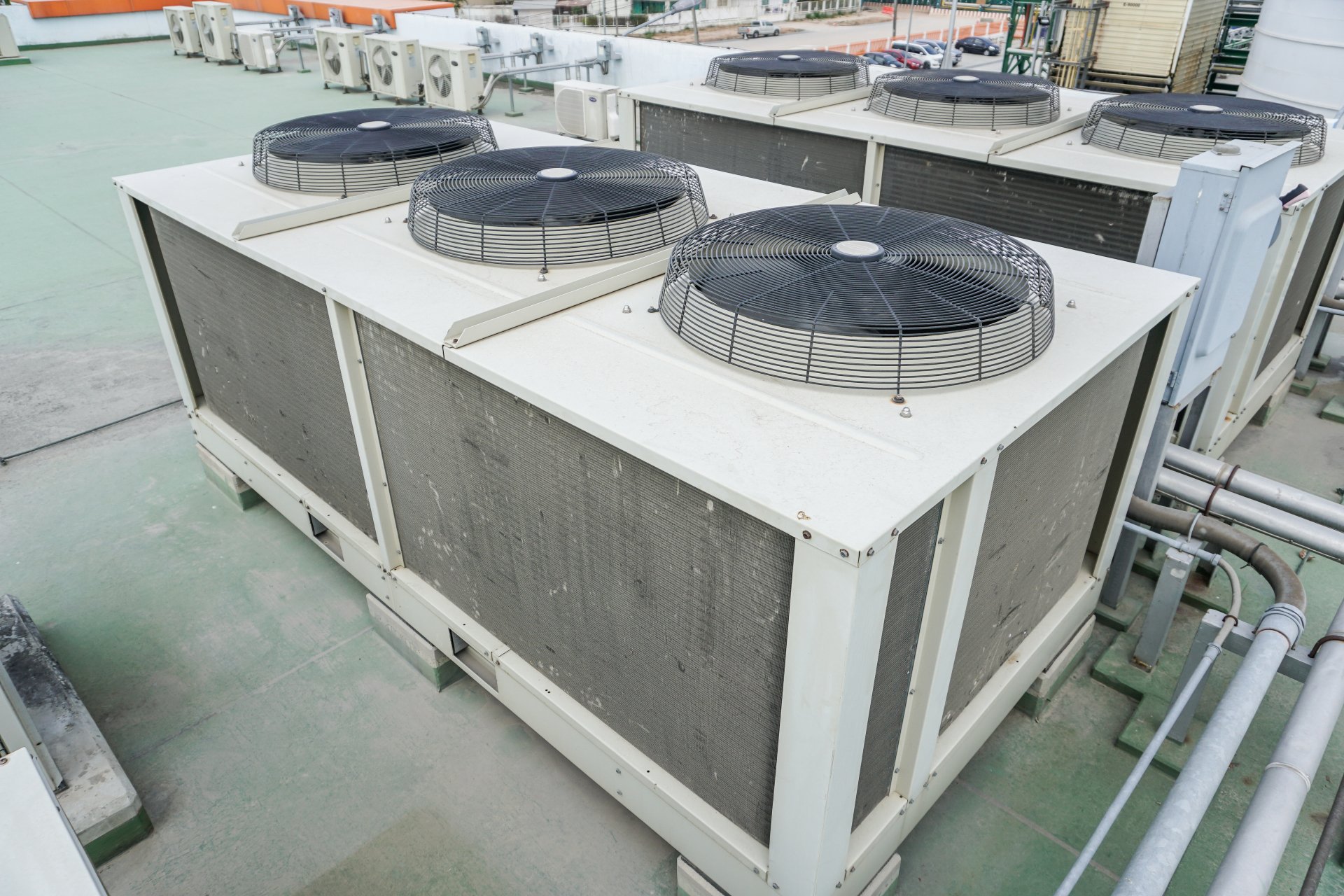
Wilmington's food scene runs from the packed oyster bars on Water Street along the Cape Fear River to the brewpubs in the Brooklyn Arts District and the national quick-service chains lining College Road through Monkey Junction. Coastal North Carolina's climate makes every one of those restaurant rooftops a high-stakes maintenance challenge: salt air accelerates metal corrosion on exhaust curbs and HVAC equipment bases, summer humidity keeps membrane surfaces perpetually damp, and Atlantic hurricane season introduces wind and rain loads that test flashings in ways most inland cities never see.
Hurricane Florence, which stalled over the Cape Fear region in 2018, demonstrated exactly how exposed Wilmington restaurant rooftops are to sustained high winds and rainfall totals measured in feet rather than inches. Even buildings that survived the storm without structural damage saw flashings pulled away from parapet walls and exhaust curbs lifted off their anchors by the wind pressure differential across the roof plane. Since then we've adopted a Miami-Dade-rated fastener schedule and hurricane-rated HVAC curb anchors as the default specification for any food-service building within the coastal exposure zone — which effectively covers all of New Hanover County.
The restaurant cluster along Oleander Drive and the Independence Mall corridor runs high-volume QSR operations year-round, with drive-through lanes operating from early morning until well past midnight. That kind of schedule generates continuous exhaust fan operation, and in Wilmington's salt-air environment, standard galvanized exhaust curb hardware corrodes within three to five years of installation. We specify stainless-steel or hot-dip galvanized curb components as standard on all coastal Wilmington restaurant work, and we replace corroded hardware on every service call rather than patching around it.
Moisture intrusion near walk-in cooler units is a problem that shows up on almost every Wilmington restaurant roof assessment we conduct. The combination of high ambient humidity, ocean-influenced temperature swings, and condensation from refrigeration equipment creates a chronically wet zone at cooler curbs where standard butyl-tape flashings fail within a few seasons. Our repair protocol removes all degraded flashing material back to clean membrane, dries the substrate with low-heat torches, and installs a fully heat-welded TPO or PVC curb wrap that creates a watertight bond impervious to the moisture levels Wilmington's coastal environment generates year-round.
Grease exhaust penetrations on Wilmington restaurants face a compounding failure mechanism that inland buildings don't encounter as severely: salt air reacts with grease residue on exposed metal surfaces to form a corrosive compound that eats through standard galvanized flashings faster than either agent would alone. We've seen restaurant exhaust curb collars in the Wrightsville Beach commercial strip that were essentially rotted through within four years of installation. The correct solution is a stainless-steel grease-rated curb collar heat-welded into a 60-mil PVC membrane — PVC because it cleans more effectively than TPO when coastal maintenance teams need to remove grease and salt residue during annual inspections.
Health code compliance takes on additional urgency in Wilmington because the New Hanover County Environmental Health Division conducts unannounced inspections, and a kitchen ventilation system compromised by a leaking exhaust curb can result in immediate corrective action notices. We provide restaurant owners with laminated roof inspection records that include photos of every penetration and flashing, GPS-referenced to the roof plan, so that health inspectors can see documented proof of a properly installed and recently inspected roofing system. That documentation has helped multiple Wilmington clients avoid violations tied to perceived ventilation deficiencies.
The brewery and taproom scene in Wilmington — led by established production breweries near the Port of Wilmington and smaller neighborhood taprooms in Soda Pop District — generates roofing demands that overlap with restaurant work but add the challenge of large refrigeration walk-in arrays and grain silo penetrations. Grain dust is abrasive and, when wet, forms a paste that blocks drainage and holds moisture against the membrane. On brewery re-roofs we install pitch-pocket covers over all grain handling penetrations and add sacrificial walk pads around high-traffic equipment areas to protect the membrane from foot traffic during grain deliveries and maintenance visits.
Wilmington's sit-down dining scene includes a number of historic buildings in the downtown district along Front Street and Castle Street, where restaurant tenants occupy century-old commercial structures with original wood decks or concrete-topped masonry walls. Those substrates require careful moisture assessment before any re-roof work because water trapped between layers of legacy built-up roofing and wood sheathing can introduce mold and rot that travels down into the dining room ceiling. We core-cut every historic Wilmington building before proposing a system and always include a deck remediation allowance in the contract scope to cover any deteriorated sheathing found during tear-off.
Restaurant operators in Wilmington dealing with a leaking roof during the summer tourist season cannot afford the week or two that a normal estimating and permitting cycle takes. We maintain a standing inventory of TPO and PVC membrane material locally, and we carry New Hanover County contractor licensing so we can pull permits and begin work without delay. Emergency stabilization — a temporary repair that stops active water infiltration while a permanent scope is being designed — is available within 24 to 48 hours for any active Wilmington commercial kitchen facing a weather-related roof failure.
- How does hurricane exposure affect the roofing specification for a Wilmington restaurant?
- Buildings in New Hanover County's coastal exposure zone require a wind-uplift-rated fastener schedule and hurricane-rated HVAC and exhaust curb anchors that exceed the standard International Building Code minimums for inland locations. We use Miami-Dade-approved fastener patterns and submit the wind uplift calculations to the county building department as part of the permit package. This documentation also satisfies most commercial property insurance requirements for coastal wind coverage.
- Why does salt air cause faster corrosion on Wilmington restaurant exhaust hardware?
- Airborne sodium chloride deposited from ocean breezes reacts with grease residue on exhaust curb hardware to form a corrosive compound that attacks galvanized and zinc-coated metals far faster than either agent alone. Standard galvanized curb collars in coastal Wilmington environments can lose structural integrity within three to five years. Stainless-steel grease-rated curb collars heat-welded into 60-mil PVC membrane are the only hardware combination we recommend for exhaust penetrations within ten miles of the Atlantic coast.
- What does a walk-in cooler curb repair involve on a Wilmington coastal restaurant?
- The repair starts with removal of all failed flashing material back to clean membrane, typically extending 12 inches beyond the visible damage to account for moisture wicking in the insulation layer. We dry the substrate with low-heat torches, inspect the deck and insulation for saturation, and install a fully heat-welded TPO or PVC curb wrap with a six-inch minimum up-the-curb height. The finished detail is seamless and cannot be defeated by the condensation and humidity levels Wilmington's coast generates year-round.
- How do you protect a Wilmington brewery roof from grain dust and walk-in array moisture?
- Grain handling penetrations get prefabricated pitch-pocket covers that prevent dust and wet grain paste from clogging drains and holding moisture against the membrane surface. Large refrigeration walk-in arrays are surrounded by tapered insulation to direct condensation runoff toward internal drains rather than letting it pond at curb bases. High-traffic equipment corridors receive vulcanized walk pads that protect the membrane from foot traffic during maintenance and delivery operations without interrupting the waterproofing plane.
- What documentation do you provide for Wilmington health code inspections?
- We provide a laminated roof inspection report with photographs of every rooftop penetration and flashing, GPS-referenced to a scaled roof plan so inspectors can verify coverage without climbing to the roof. The report includes membrane system specifications, installation date, and the name and license number of the installing contractor. Multiple Wilmington clients have used this documentation to resolve health inspection questions about kitchen ventilation integrity without requiring a physical re-inspection of the roof assembly.