Roof drainage is not a secondary concern in Wilmington's commercial roofing market — it is a primary structural safety issue. With 60.15 inches of annual precipitation, much of it arriving in concentrated tropical and convective storm events, the drainage systems on commercial flat roofs in New Hanover, Brunswick, and Pender counties face loading conditions that simply do not exist in drier markets. A tropical storm event delivering two to three inches of rainfall per hour onto a 50,000-square-foot warehouse roof generates a water volume that must exit the roof system fast enough to prevent structural overloading. One inch of water over 50,000 square feet weighs approximately 260,000 pounds. At two inches of depth — a modest ponding condition during a heavy tropical rain event on a partially obstructed drain system — that load exceeds the design capacity of many commercial roof structures. Drain sizing, placement, and maintenance are not details to be left to minimum code compliance. They are engineering decisions that affect structural safety.
The Port of Wilmington warehouse buildings and the large logistics and distribution facilities in Northchase Industrial Park and International Logistics Park present the most significant drainage design challenges in the Wilmington commercial market. These buildings have large, flat roof areas — often 80,000 to 200,000 square feet — with minimal structural slope, long distances between drain points, and in some cases drainage systems that were designed decades ago to minimum code standards that did not anticipate the rainfall intensity events now documented in current engineering data. When we assess drainage on large industrial roofs, we calculate the actual drainage capacity of the installed drain system against the current design rainfall intensities for New Hanover County and identify whether the primary and overflow drainage system meets the load case. Buildings that were code-compliant at construction may be undersized relative to current data on extreme rainfall events in the Cape Fear region.
Primary drain sizing and placement is the starting point of drainage adequacy. Internal roof drains should be located to minimize the distance water must travel across a flat roof surface to reach a drain point, and the drain bowl diameter, outlet size, and connected piping must have sufficient flow capacity for the roof area they serve. Undersized drain bodies restrict flow even when the drain is fully clear — a correctly sized roof drain with a clogged strainer may flow better than an undersized drain with a clean strainer. We evaluate both the drain sizing and the drain condition in every drainage assessment, and we replace undersized drain bodies where the drainage calculation shows that the installed drain cannot handle the required flow rate for the roof area it serves.
Overflow protection is required by code and is a genuine structural safety provision on Wilmington commercial buildings. Overflow drains, overflow scuppers through parapet walls, or secondary drain systems must be sized and positioned to prevent water accumulation beyond the structural design depth if primary drains are obstructed. In the Wilmington market, we have documented a number of commercial buildings where overflow scuppers have been sealed over with roofing material during previous re-roofing projects, where overflow drains have been incorrectly positioned higher than the primary drain (defeating their overflow function), or where the overflow protection was simply never installed to begin with. Any of these conditions represents a structural risk during the heavy rainfall events that Wilmington experiences regularly. We identify and correct overflow deficiencies as a priority item in every drainage assessment.
Drain maintenance is a recurring service need in Wilmington's climate. Commercial roof drains accumulate debris — leaves, organic material, granules washed from aging modified bitumen cap sheets, bird nesting material, and wind-blown grit — at a rate that varies by season and building location. The live oak canopy prevalent in Wilmington's commercial districts contributes significant debris loads, particularly in fall. We recommend pre-hurricane season drain clearing in April or May and post-season drain inspection and clearing in October or November as the minimum maintenance cadence. Buildings under heavy tree canopy or with significant rooftop HVAC equipment that sheds debris may require mid-season clearing, particularly before forecast heavy rainfall events during tropical weather systems.
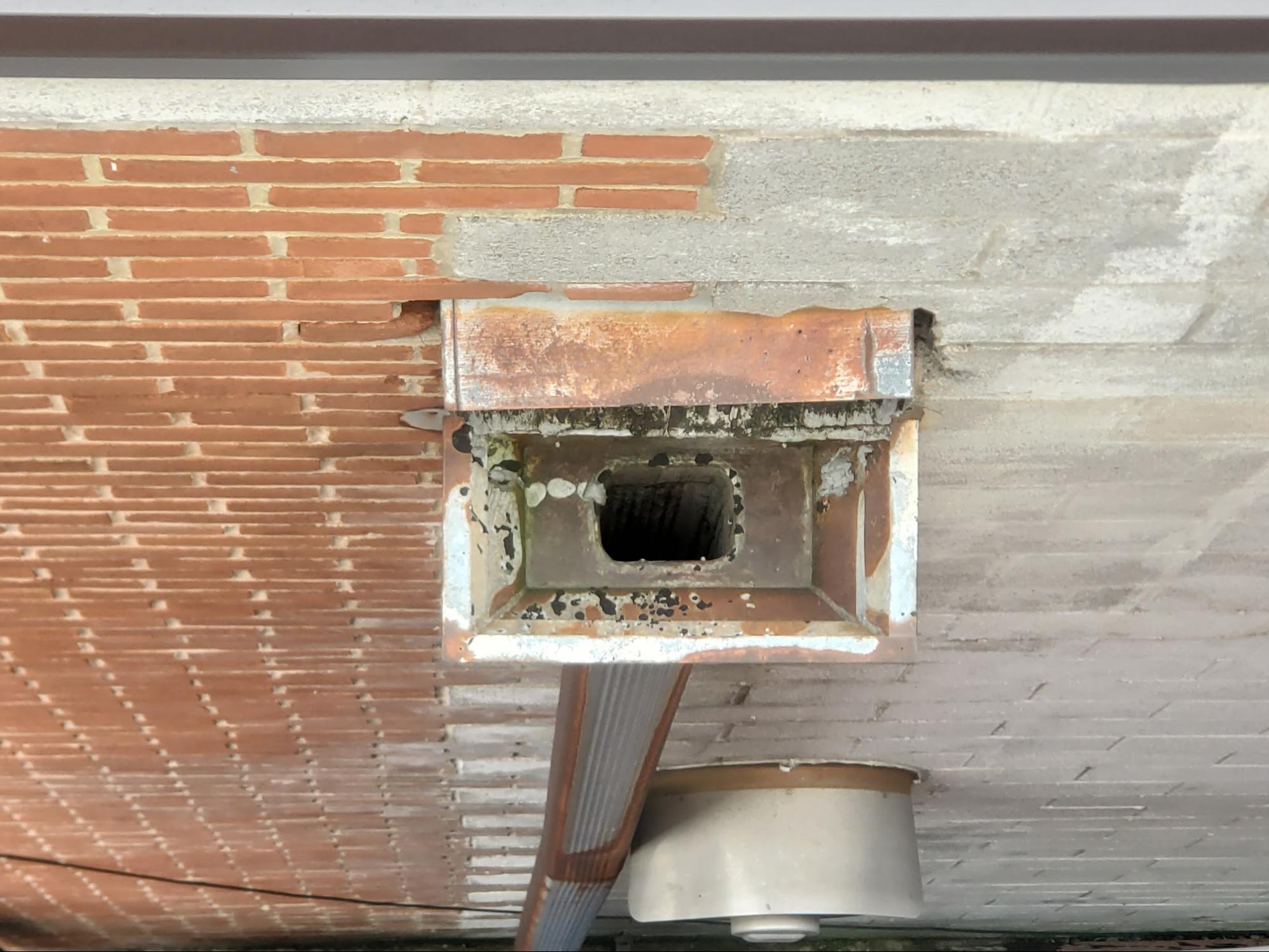
Scuppers through parapet walls provide overflow drainage and, on some building types, serve as primary drainage for sections of the roof. Scupper sizing must be adequate for the roof area draining to them, and scupper construction must be correctly detailed to prevent water infiltration at the wall opening. A through-wall scupper that is not properly flashed at the interior wall face allows water to enter the parapet wall assembly — water that migrates into the masonry and can cause deterioration of the parapet structure over time. We flash scupper installations correctly with appropriate through-wall flashing material, slope the scupper box toward the exterior, and seal the exterior termination with materials rated for Wilmington's coastal exposure. Corroded or deteriorated scupper liners are replaced, not sealed over — a sealant repair on a structurally deteriorated scupper is a temporary fix that fails again in the next significant rainfall event.
Hurricane-season drain audits are a service we provide specifically for the pre-storm preparation window. This is a focused assessment of primary and overflow drainage capacity and condition — not a full roof inspection, but a targeted evaluation of the drainage systems' readiness for the sustained, high-intensity rainfall that tropical events produce. We clear all primary drains, verify overflow protection is functional and unobstructed, check drain clamp ring tightness and drain body condition, and identify any low spots in the roof field where water consistently accumulates due to structural deflection or tapered insulation system limitations. The audit report identifies drainage deficiencies that should be corrected before hurricane season and provides the documentation baseline for drainage conditions before any storm event.
Tapered insulation systems that improve drainage slope are a permanent solution to the ponding water conditions that plague many flat commercial roofs in Wilmington. A roof designed and built with zero slope — truly flat — will always pond after every significant rain event. Over time, that ponding accelerates membrane aging, promotes biological growth that degrades reflective surfaces, and creates the chronic standing water conditions that indicate a drainage problem. Installing tapered polyisocyanurate insulation in a slope-to-drain pattern — typically 1/4 inch per foot minimum — as part of a roof replacement project eliminates ponding conditions permanently. We design tapered insulation layouts for replacement projects using survey data from the existing roof to confirm existing drain locations and identify the insulation taper pattern that achieves positive drainage to those drains.
For commercial building owners who have experienced structural concerns after heavy rainfall — visible deflection in roof deck, interior column reactions to water loading — we recommend engaging a structural engineer to assess the roof system's actual load capacity and the adequacy of the drainage system relative to that capacity. We work alongside structural engineers on these assessments, providing roofing condition data and drainage system documentation while the structural assessment addresses the load capacity question. The combination of roofing contractor assessment and structural engineering review produces the complete picture needed to make informed decisions about drainage upgrades, load-limiting measures, or structural reinforcement.
Questions Owners Ask
How do I know if my commercial roof's drainage system is adequate for Wilmington's rainfall?
The signs of inadequate drainage include persistent ponding that remains more than 48 hours after a rain event, visible deck deflection in areas where water consistently accumulates, and drain overflow during heavy rain events. A drainage capacity assessment — calculating the flow capacity of the installed drain system against the design rainfall intensity for New Hanover County — provides a quantitative answer. We conduct drainage assessments as part of our pre-hurricane maintenance service and as standalone assessments for buildings where drainage concerns have been identified.
Are overflow scuppers really required on my commercial building?
Yes. The International Building Code requires overflow drainage on parapeted roofs in the form of secondary drains, overflow scuppers, or both, sized and positioned to prevent water accumulation beyond structural design depth. This is not optional and it is not a recommendation — it is a code requirement with a structural safety rationale. If your building's overflow protection has been sealed over, improperly positioned, or never installed, correcting that condition is a priority regardless of whether you are planning other roof work.
How often should roof drains be cleaned on a commercial building in Wilmington?
At minimum, before hurricane season (April or May) and after peak fall debris season (November). Buildings under heavy live oak or other deciduous canopy should add a mid-summer cleaning to the schedule. We also recommend clearing drains before any forecast heavy rain event during hurricane season — a drain that was clear in May may be partially obstructed by September after summer debris accumulation. The cost of an extra drain cleaning service is negligible compared to the consequences of a structural overload event from blocked drainage during a tropical storm.
My flat roof always has standing water after it rains. Is this normal?
Some minor ponding that clears within 24 to 48 hours of a rain event is tolerable on flat commercial roofs. Ponding that persists beyond 48 hours, or that regularly accumulates to depths of more than a half inch, indicates a drainage problem — either inadequate slope, undersized drains, obstructed drains, or structural deflection creating a low spot. Chronic ponding accelerates membrane aging, promotes biological growth that degrades reflective coatings, and in extreme cases creates structural loading concerns. We assess the specific cause of ponding on each building and recommend the appropriate correction — drain clearing, drain relocation, or tapered insulation installation to create positive drainage slope.
A tropical storm dropped a lot of water on my building last season and I noticed the roof deck flexing. Should I be concerned?
Yes — visible deck deflection under water loading is a structural concern that warrants a professional assessment. Deck deflection under water loading suggests either that the drainage system was inadequate (allowing water to accumulate to a depth that created significant structural load) or that the deck structure itself has deteriorated. We recommend engaging a structural engineer to assess the deck's current load capacity and condition, and we can provide roofing-side documentation of the drainage system condition and any deck deterioration visible during a roofing inspection. Do not defer this assessment — a structural failure event during a tropical storm is a catastrophic outcome.