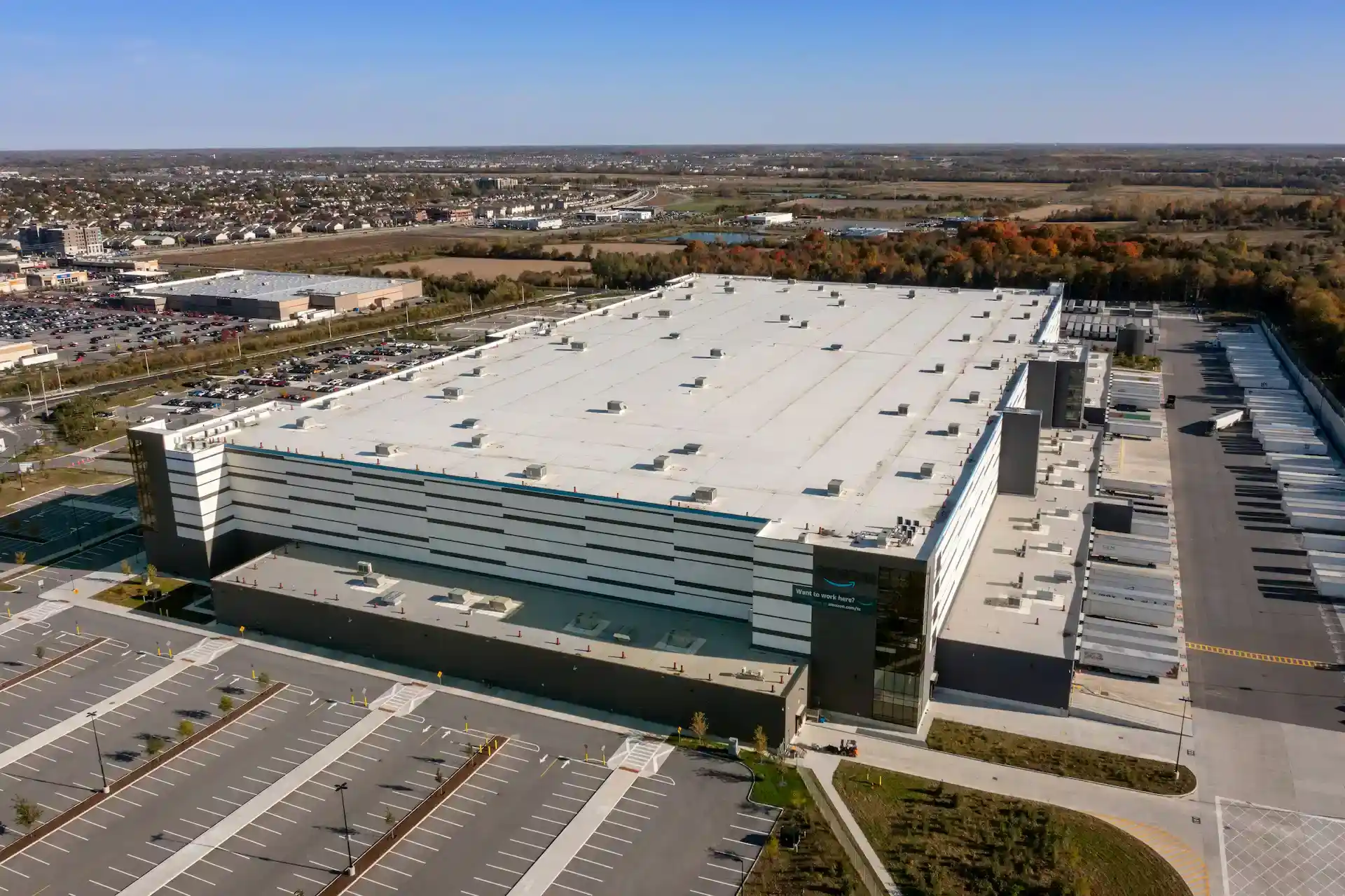
GXO Logistics' distribution operations at the Wilmington region's logistics park near the Port of Wilmington anchor a coastal North Carolina warehouse economy that also includes cold-storage facilities, building materials distribution centers, and e-commerce fulfillment operations serving the Carolina coast and inland Piedmont. The Lower Cape Fear region presents roofing professionals with a demanding combination of Gulf Stream-warmed tropical storm exposure, coastal humidity that accelerates material degradation, and the direct hurricane threat that placed Wilmington in Hurricane Florence's catastrophic path in 2018 — demonstrating in unmistakable terms what Category 1 rainfall and wind can do to unprepared commercial building envelopes.
Hurricane Florence's impact on Wilmington-area warehouse roofs in September 2018 produced a catalogue of failure modes that have directly shaped current roofing specifications in the New Hanover County commercial market. Improperly fastened edge metal was the leading cause of catastrophic membrane loss as parapet cap flashings were stripped, providing wind leverage against the entire roof field. Buildings where edge metal was attached with exposed screws at standard spacing failed at wind speeds well below Florence's peak, while buildings with concealed-clip edge metal systems and mechanically fastened perimeter zones generally retained membrane integrity even when surrounding structures did not. This documented performance difference has made concealed-clip edge metal a near-universal specification requirement in the Wilmington market since 2019.
TPO fully adhered over high-density polyiso cover board is the dominant specification for new Wilmington warehouse construction and major re-roofing projects. The white membrane provides solar heat gain management in a climate where cooling season extends from April through October, and the fully adhered attachment eliminates the progressive seam-peeling failure mode that mechanically fastened systems can experience during sustained high-wind tropical events. Two-ply base sheet systems with modified bitumen or granule-surfaced cap sheets are still used on some smaller or older warehouse buildings, but single-ply systems with factory-welded seams generally provide more consistent long-term waterproofing performance in coastal North Carolina's challenging humidity environment.
Coastal humidity in the Wilmington area means that moisture management during installation is critically important. Concrete roof decks, common in older industrial buildings near the port, can harbor significant moisture content that must be allowed to vapor-drive out before a new fully adhered membrane is installed over them. Measuring deck moisture content with a calibrated moisture meter before installation begins, and using a vented base sheet or vapor-permeable primer where moisture content is elevated, prevents the blistering and adhesion failure that occurs when moisture is trapped under an impermeable membrane on a humid coastal substrate.
Dock penetrations and loading dock canopy flashings at Wilmington warehouses serve an additional function in this coastal environment: they must seal against wind-driven rain during tropical storm and hurricane events where rainfall intensity and horizontal wind pressure are orders of magnitude higher than standard design conditions. Flexible EPDM or TPO counterflashing at all penetrations, secured with stainless-steel termination bars and lapped over primary membrane with appropriate adhesive, provides the best seal against the severe-storm conditions that Wilmington warehouses can face multiple times per year during hurricane season.
The Port of Wilmington's logistics activity means that many local warehouses operate 24 hours a day, seven days a week, creating complex scheduling challenges for re-roofing projects that need to work around continuous operations. Pre-project planning must identify sensitive areas — refrigerated storage, electronics inventory, paper products — where temporary roofing protection is needed during membrane removal activities, and phased work plans must be developed in coordination with facility operations managers. Local Wilmington commercial roofing contractors who have worked on port-adjacent facilities understand these coordination requirements and can develop project logistics plans that minimize business disruption.
North Carolina's building code, the 2018 North Carolina Building Code (NCBC), adopts and amends the IBC and IECC with state-specific amendments that reflect the state's geographic diversity from the mountains to the coast. Wind speed design for New Hanover County industrial buildings reflects the coastal exposure, and the NCBC wind provisions require the same kind of enhanced perimeter and corner fastening patterns as are required by Florida's building code in similar coastal zones. The Wilmington Engineering Department and New Hanover County Building Inspections both enforce these provisions through permit plan review and field inspection, and experienced local roofing contractors are familiar with the specific documentation required to obtain permit approval in each jurisdiction.
Energy performance on Wilmington warehouse roofs is shaped by the southeastern North Carolina Climate Zone 3A classification, which calls for continuous insulation values that most pre-2005 warehouse buildings do not meet. The dominant cooling load in this climate means that the energy payback from cool-roof membrane installation is among the fastest in the region, and Duke Energy Progress's commercial efficiency program provides technical assistance and rebates for cool-roof projects that meet ENERGY STAR reflectance criteria. Combining insulation upgrade and cool-membrane installation in a single re-roofing project is the most cost-effective approach to achieving both energy code compliance and utility rebate eligibility.
Post-hurricane recovery work creates a surge demand for commercial roofing services in the Wilmington market that can overwhelm local contractor capacity within days of a significant storm. Building owners who have pre-established relationships with qualified local commercial roofing contractors — preferably documented in a pre-disaster service agreement — receive priority scheduling for emergency repairs and permanent re-roofing work, while buildings without established contractor relationships may wait weeks or months for service as contractors prioritize existing clients. This relationship investment, made before a storm occurs, has proven to be one of the highest-return decisions a Wilmington warehouse owner can make.
- How did Hurricane Florence affect Wilmington warehouse roofs?
- Hurricane Florence's 2018 landfall near Wrightsville Beach exposed significant weaknesses in edge metal attachment and perimeter fastening on many Wilmington-area warehouse roofs. Buildings with improperly secured parapet cap flashings experienced cascading membrane failures, while properly detailed buildings retained integrity. The primary lessons were: specify concealed-clip edge metal, use enhanced perimeter fastening patterns, and verify attachment with third-party inspection during installation.
- What membrane is best for a Wilmington warehouse roof?
- Fully adhered TPO over high-density polyiso cover board is the standard recommendation for coastal North Carolina warehouse roofs. The fully adhered system provides superior wind uplift resistance compared to mechanically fastened or ballasted alternatives, the white membrane manages solar heat gain in the long southeastern cooling season, and polyiso provides R-values meeting NCBC Climate Zone 3A requirements.
- How does coastal humidity affect warehouse roof installation in Wilmington?
- High ambient humidity slows adhesive cure times and can compromise the bonding of fully adhered systems applied during humid summer days when relative humidity exceeds 90 percent. Experienced local contractors monitor weather conditions and substrate moisture content, scheduling membrane application on days when temperature and humidity conditions fall within the adhesive manufacturer's specified application window.
- What permits are required for warehouse re-roofing in Wilmington or New Hanover County?
- Commercial re-roofing permits are required from either the City of Wilmington Inspections Division or New Hanover County Building Inspections, depending on the building's location. Permit applications must include a project specification document and wind uplift calculations demonstrating compliance with the 2018 NCBC. Final inspection is required before the permit is closed.
- Should I have a pre-hurricane service agreement with a Wilmington roofing contractor?
- Strongly recommended. A documented pre-disaster service agreement with a qualified local commercial roofing contractor ensures priority access to emergency repair services after hurricane events when contractor demand far exceeds local supply. The agreement typically covers emergency tarping and temporary repairs immediately following a storm, followed by permanent repair or replacement work on a prioritized schedule.